
Let’s be honest: walking out of a grocery store these days can feel like you just got pickpocketed. You walk in for milk, eggs, and maybe some chicken, and somehow you’re staring at a receipt that looks like a car payment. Between the creeping phantom of inflation, the gorgeous packaging designed specifically to hypnotize you, and the absolute psychological minefield that is the snack aisle, it’s scary how fast a few bags of food can drain your checking account.
But here’s the good news: you don’t need to become an extreme couponer who hoards 40 bottles of mustard, and you definitely don’t need to live off instant ramen to save serious cash. That’s not sustainable, and frankly, it miserable. You just need to change how you play the game.
With a few shift-in-perspective tweaks to your routine, you can keep eating the food you actually love while keeping your hard-earned money exactly where it belongs—in your pocket. Here is the ultimate guide to outsmarting the grocery store, written for real life.
1. Stop Falling for the “Sale” Trap

Retailers are absolute geniuses at behavioral psychology. They slap a bright yellow “SPECIAL OFFER!” or “10 for $10!” tag on something, and our brains instantly short-circuit. We scream, “Grab it, we’re winning!”
But a discount is only a discount if it’s something you were already going to buy. If you purchase a massive jar of pickled artichoke hearts because it was 40% off, but it ends up sitting in the dark depths of your pantry until the next presidential election, you didn’t save money. You just paid the store to hold onto their trash for them. Real savings mean getting a deal on your actual staples, not accumulating random clutter.
2. Know Your Number Before the Doors Slide Open
If you don’t have a clear spending limit before you grab a cart, you’re essentially writing the grocery store a blank check. They will gladly fill it out for you.
Take a quick look at what you’ve actually spent over the last month—be honest with yourself—and set a realistic weekly cap. Treat that number like a hard boundary, not a casual suggestion. Having a budget forces a healthy kind of friction. It makes you prioritize the essentials and forces you to think twice about that artisan, rosemary-infused sea salt that suddenly feels vital to your existence.
It can also be helpful to estimate the total cost of your shopping list before you arrive at the store. While the final amount may vary slightly, having a rough idea of what you expect to spend creates greater awareness throughout the shopping trip. If you notice your cart approaching your spending limit, you can make adjustments before reaching the checkout line.
3. Let the Sales Do the Meal Planning
The old-school advice is to sit down, write out a rigid menu for the week, and then go buy the ingredients. But if your menu calls for fresh asparagus and out-of-season berries, you’re going to pay a premium.
Flip the script. Before you write a single meal down, open your store’s app or look at the digital flyer. If pork chops and zucchini are on a massive markdown, congrats—you’re having pork chops and zucchini this week. Building your meals around what’s already discounted is the single easiest way to slash 20% off your bill instantly without changing how much you eat.
Another benefit is that sale items are often abundant and fresh, especially when it comes to seasonal produce. Fruits and vegetables that are in season are usually less expensive and offer better flavor than out-of-season alternatives. By incorporating these products into your meal plans, you can enjoy healthier meals while keeping your grocery budget under control.
4. Never, Ever Shop Without Armor (A List)

Walking into a grocery store without a list is like going into battle without a shield. It’s financial suicide. Stores are meticulously designed to make you spend money. The bakery smells like heaven to trigger your appetite; the milk is all the way in the back so you have to walk past thousands of temptations to get it; and the checkout line is packed with candy and impulse buys.
Write down exactly what you need based on your sale-focused meal plan. Stick to it like glue. If it’s not on the paper (or your phone notes), it doesn’t exist. Period.
5. Play the Loyalty Game (But Keep Your Wits)
If your favorite store has a free loyalty program or an app, download it immediately. Yes, it’s annoying to have another app on your phone, but if you aren’t using it, you are essentially paying a “laziness tax.” You’re missing out on digital coupons, member-only pricing, and gas points.
Just remember the golden rule of store apps: use the rewards for your regular staples. Don’t let a “3x bonus points on fancy imported cheese” notification trick you into buying something you don’t need.
6. Master the Sneaky Math: Compare Unit Prices
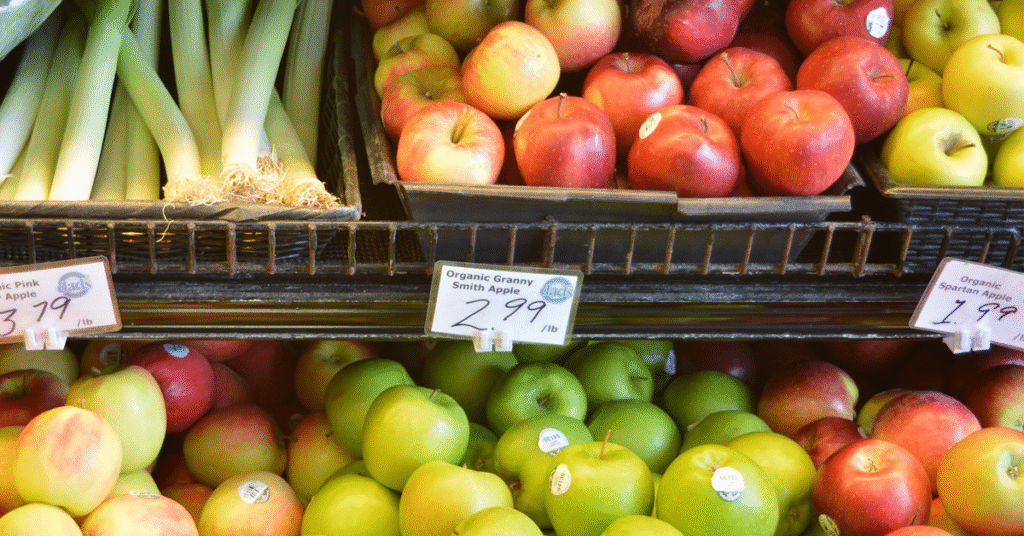
Big boxes aren’t always cheaper. Brands know that consumers have been conditioned to believe “bulk = better value,” so they sometimes quietly price larger packages higher per ounce.
To beat them at their own game, look at the tiny, faded text on the shelf tag—the unit price (e.g., price per ounce, per gram, or per sheet for paper towels). That is the ultimate equalizer. Sometimes, buying two smaller boxes that happen to be on sale is way cheaper than buying the jumbo “value size.”
7. Drop the Brand Snobbery
Let’s be real for a second: most store-brand products (like Great Value, 365, Kirkland, or Kroger brand) are made in the exact same factories as the big-name brands. They use the same ingredients and the same processing lines—they just don’t spend millions of dollars on Super Bowl commercials and flashy packaging.
Switch your pantry staples, canned beans, flour, sugar, and frozen veggies to the generic version. You’ll save 20% to 30% right off the bat, and in a blind taste test, you honestly won’t taste the difference.
8. Eat with the Seasons
Buying fresh strawberries in the dead of winter is a losing game. They taste like cardboard, and they cost a fortune because they had to be flown in on a cargo plane from across the world.
Shop the season. Buy squashes and root vegetables in the fall; berries and tomatoes in the summer; citrus in the winter. Not only is seasonal produce way cheaper because the supply is overflowing, but it also tastes a million times better because it didn’t spend three weeks ripening in a shipping container.
9. Eat a Snack Before You Go

We’ve all done the “hungry grocery run,” and it is an absolute disaster. When your blood sugar is low, your primal brain takes over. Suddenly, frozen jalapeño poppers, bakery cookies, and three different flavors of potato chips look like matter-of-life-and-death necessities.
Hunger completely obliterates your impulse control. Eat a handful of almonds, a banana, or a piece of toast before you head out. Shop with a full stomach and a clear, logical head.
10. Fight the “Crisper Drawer” Black Hole
The most expensive food you buy is the food you throw away. When you let a bag of spinach turn into sad, green slime in the back of the crisper drawer, you are literally tossing dollar bills directly into the trash can.
Treat your fridge like a business. Keep it organized. Use the “FIFO” method (First In, First Out): put older items toward the front so you use them before they go bad. Have an “Eat Me First” bin for items that are nearing the end of their lifespan, and get comfortable with throwing random leftover veggies into an omelet or a stir-fry at the end of the week.
The Bottom Line
At the end of the day, stretching your grocery budget isn’t about deprivation, and it’s not about feeling guilty for wanting a treat. It’s simply about being intentional.
Every small choice—choosing the store-brand oats, checking the unit price on the peanut butter, or eating a quick snack before you leave the house—creates a compounding effect. Over the course of a year, these tiny, effortless habits will easily save you hundreds, if not thousands, of dollars. Play the game smarter, keep your money, and enjoy your food!
FAQ’s
1. What is the easiest way to save money on groceries?
Plan meals and shop with a list.
2. Are store-brand products worth buying?
Yes, they often offer similar quality at lower prices.
3. How can I find the best grocery discounts?
Use store apps, loyalty programs, and weekly ads.
4. Do coupons really help save money?
Yes, when used for items you already need.
5. How can I reduce food waste?
Store food properly and use leftovers before they expire.
Coupon Secrets That Can Save You Hundreds Every Year
Nurturing our financial health does not always demand a drastic pruning of the things that…

Amazing Top Deals on Popular Products You’ll Love
Shopping has woven itself deeply into the fabric of our modern lives. Whether we are…
Exclusive Travel Deals to Your Favorite Destinations
Travel is one of life’s greatest pleasures. It allows us to explore new places, experience…

How to Maximize Grocery Discounts and Stretch Your Budget Further
Let’s be honest: walking out of a grocery store these days can feel like you…

The Best Athletic Shoes for Comfort, Support, and Daily Performance
Finding the right athletic shoes can make a remarkable difference in your daily life. Whether…

The Ultimate Guide to Finding the Best Fashion Deals Online
Online fashion shopping has transformed the way people discover, compare, and purchase clothing, footwear, and…