
I usually think of home shopping as a small job. Something needs replacing, so I open a shopping app, look at a few options and expect to be done in ten minutes. But online shopping rarely stays that simple. A bedsheet leads to matching pillow covers, then a set of curtains catches my eye. Before long, I’m looking at storage baskets and bedside lamps that weren’t even on my list.
The funny thing is that none of these items may seem particularly expensive on its own. The difference becomes clear when the total appears at checkout.
Home products are easy to buy on impulse because they promise to make everyday life a little nicer. A new lamp can brighten a dull corner, and a simple organiser might finally give those loose things in a drawer a proper place. The trouble starts when we buy more than our homes actually need.
You don’t need to spend a fortune to make your space comfortable. Sometimes, replacing one worn-out item or finding a practical piece of furniture is enough. The trick is knowing which offers are worth your money and which ones only look attractive on a screen.
Here are some practical ways to find the best home deals in 2026, from affordable decor and kitchen products to furniture, cleaning supplies and everyday essentials.
1. Refresh a Room Without Buying Everything New
Have you ever looked around your room and felt that something needed to change, even though nothing was really wrong? It happens. The bedsheet has been the same for months, the table looks cluttered, or the corner near the wardrobe has slowly collected things that don’t belong there.
Before spending money, try changing what you already have. Move a chair, clear the bedside table or put away the things sitting on top of your cupboard. These little jobs can make a room feel less crowded without costing anything.
If you still want something new, pick one item that will make a noticeable difference. Fresh cushion covers, a different bedsheet or a small lamp can change the feel of a familiar room. You don’t have to replace the curtains, rugs and furniture at the same time.
Colour is worth considering, too. If your room already has neutral curtains and furniture, a couple of colourful cushions may be all you need. Buying a complete matching set can cost more without making the room look much different.
When browsing home decor offers, look beyond the main photograph. Check the dimensions of rugs, curtains and shelves. Pictures can make products appear bigger than they are, and returning a bulky item because it doesn’t fit is an avoidable headache.
A home makeover can happen gradually. There’s no need to finish everything in one shopping trip.
2. Buy Kitchen Essentials You Will Actually Use

Kitchen products have a way of looking more useful online than they sometimes turn out to be at home. A set of matching jars looks lovely on a shelf, but that doesn’t mean every kitchen needs twelve new containers.
Start by opening your cupboards. Perhaps the lunch box you carry to college or work has a broken lid. Maybe you need a container for flour, or the frying pan you use most days has started sticking. Those are clear reasons to shop.
For lunch boxes, think about how easy they are to carry, clean and close securely. For cookware, make sure the product suits your cooking habits and stove. Buying a large set may not be sensible if you prepare simple meals and only need one or two pans.
Storage space matters just as much as price. A spice rack might look tiny in a product image but take up half the counter once it arrives. Check its measurements and the capacity of containers before placing an order.
Be careful with bundle offers as well. A pack of ten containers may cost less per piece, but that saving means very little if you only need three. The remaining containers may end up taking space rather than serving a purpose.
Good kitchen deals should make cooking, storing or cleaning easier. They don’t need to come in the biggest package.
3. Home Essentials to Consider Under ₹500, ₹1,000 and ₹2,000
You can find useful home products at different price points, but the best choice depends on what needs attention first. These budgets are general examples rather than confirmed live offers; prices can change with the seller, material, brand and sale period.
Small purchases under ₹500
At this price level, you might look at drawer organisers, basic cushion covers, cleaning brushes, kitchen cloths or small storage boxes.
Think about the little things that keep getting misplaced. Keys disappear into a drawer, charging cables become tangled, and receipts collect on a table. A simple organiser may solve the problem without requiring a new cabinet.
Read the product listing carefully. Check how many pieces are included, what material they are made from and how large they are. A photograph showing several organisers doesn’t necessarily mean the price covers the whole set.
Useful options under ₹1,000
A budget of ₹1,000 may open up options such as selected bedsheets, laundry baskets, bathroom storage products and table lamps.
Imagine that clothes keep piling up beside your wardrobe. A laundry basket that fits into that unused corner could be a more practical purchase than another decorative accessory. Similarly, a bedsheet is a better buy when it fits your mattress properly and feels suitable for regular use.
For lamps, look at the dimensions and check whether a bulb is included. Small details like these can affect the final cost.
Purchases under ₹2,000
With up to ₹2,000, you may find compact shelving, side tables, selected cookware and some household appliances.
Furniture needs a little more thought than a small accessory. Measure the available space, including the area needed to open drawers or move around the furniture. For appliances, compare the features, warranty and electricity requirements rather than choosing based on appearance alone.
There’s also no reason to use your entire budget just because you’ve set one. If the item you need costs ₹700 and does the job well, keeping the remaining money is a perfectly good decision.
4. Think Beyond the Price When Buying Appliances
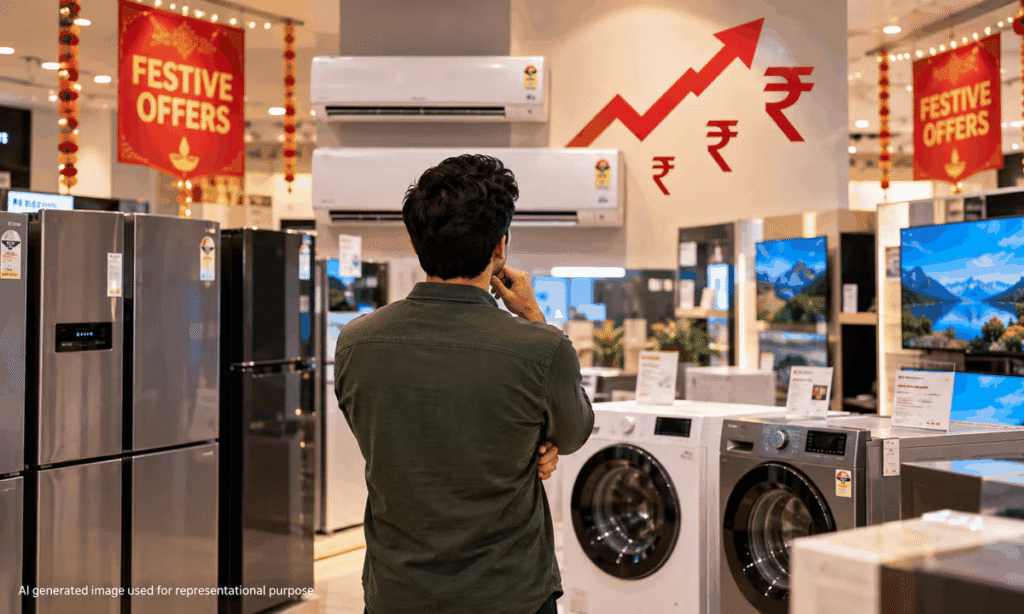
When an appliance is on sale, the reduced price is usually the first thing you notice. It’s understandable, but the amount you pay at checkout is only part of the expense.
Electricity use can add to the cost over time, particularly for appliances that run for several hours each day. If you’re replacing a bulb, comparing suitable LED options makes sense. For fans and other appliances, look at the power rating, energy information, warranty and features.
Your own routine should guide the decision. An appliance used every day deserves more attention than something switched on once in a while. Even so, don’t assume that a newer model will automatically save enough money to justify replacing an appliance that still works well.
For example, a new fan may be more efficient, but you still need to consider its purchase price and how often you use it. The potential savings depend on the models being compared, usage and local electricity rates.
If your old appliance has stopped working or needs frequent repairs, comparing replacements is sensible. Look at the full picture instead of letting a discount sticker make the decision for you.
5. Make Better Use of Space in a Small Home

Storage problems often develop slowly. A few bags go beside the wardrobe, papers settle on the dining table, and the cupboard becomes so full that closing its door takes a little effort. Eventually, buying organisers starts to feel like the obvious solution.
Sometimes it is. But first, see whether the problem can be solved by moving things around. Items you rarely use could go under the bed, while a small shelf might free up space on your desk. A foldable basket is handy when you need extra storage but don’t want another permanent piece of furniture.
If you live in a rented room, lightweight products that are easy to carry may be more convenient. In a larger room, a compact cabinet or a table with drawers could offer more lasting value.
Multipurpose furniture is another option. A storage ottoman can provide a seat and hold suitable belongings, while a side table with shelves gives books and chargers a place to stay.
Measure before ordering anything bulky. Check the width, depth and height, and consider whether the furniture will block a walkway or cupboard door. An item that looks compact on a phone screen can feel quite large in a small room.
And don’t overlook the things you already own. Sorting old papers, unused containers and belongings you no longer need may create more space than another set of storage boxes.
The most useful home organisation product is the one that solves a specific problem without creating a new one.
6. Find Better Value on Cleaning Supplies

Cleaning products might not be exciting purchases, but they are the sort of things a household regularly needs. A worn-out mop, a damaged brush or cloths that no longer clean properly may deserve replacing.
Before buying a complete cleaning kit, check whether every part needs to be replaced. If the mop handle is still in good condition, a compatible refill could be enough. Spending money on a whole new set isn’t always necessary.
Pack sizes deserve attention, too. One offer may include extra cloths, while another has a lower price but requires you to purchase replacement parts separately. Compare what you actually receive rather than looking only at the headline price.
Customer reviews can reveal practical problems. Look for repeated comments about weak handles, cloths that fall apart after washing or replacement parts that are difficult to find. These details are often more useful than polished product photographs.
Buying in bulk works best when you regularly use the products. A multipack of microfiber cloths may be sensible for a busy household. Several spare brushes, however, can sit untouched in a cupboard for months.
Choose cleaning tools that suit the surfaces in your home and are comfortable to handle. Extra attachments and fancy packaging aren’t much help if the basic product doesn’t perform well.
7. How to Tell Whether a Home Deal Is Worth It

A product advertised with a big discount isn’t necessarily the cheapest or best option. What matters is the amount you finally pay and what you receive for it.
Suppose a storage cabinet has a listed price of ₹3,000 and a 30% discount. That brings the price to ₹2,100 before delivery. Another seller lists a cabinet for ₹2,000.
At first glance, the second option seems cheaper. But what if it’s smaller, has less storage space or uses a different material? The lower price is useful only when the product also meets your needs. If the size and quality are similar, saving ₹100 may be worthwhile.
Before ordering, take a moment to check:
- Final cost: Include delivery charges and any additional fees.
- Size: Compare the listed dimensions with the space available at home.
- Material: Check the description instead of relying on photographs.
- Reviews: Look for recurring complaints about quality, damage or sizing.
- Returns: Understand the return window and any applicable charges.
- Warranty: Check what is covered, particularly for appliances and electrical products.
- Seller information: Make sure the listing provides clear product details and support information.
Coupons can be misleading when they require extra spending. For example, imagine a shelf costs ₹1,500 and a coupon offers ₹100 off orders worth ₹2,500 or more. Adding another ₹1,000 of products just to qualify would increase your spending considerably.
If you already need those extra products, the coupon might help. If not, skipping it may be the smarter choice.
Countdown timers and messages about limited stock can also make a purchase feel urgent. Take a breath and check the details. A discount is not much of a bargain if the product arrives damaged, doesn’t fit or isn’t suitable for your home.
8. A Few Habits That Can Keep Home Shopping Under Control

You don’t need a complicated spreadsheet to manage everyday shopping. A simple list on your phone can help you remember what you actually need.
Write down the items that are worn out, missing or causing inconvenience. Perhaps the bedsheet needs replacing, the kitchen is short of suitable containers, or the laundry basket has broken. Start with those things before browsing products you don’t particularly need.
Decide how much you’re comfortable spending before opening a shopping app. It’s easier to stay within a limit when you have already thought about it, rather than deciding your budget while looking at tempting offers.
One useful habit is to leave non-essential items in your cart until the next day. When you look again, you may still want the product, or you may realise that you were attracted mainly by the discount. Either way, the pause gives you time to make a more considered decision.
Social media can make this harder. A beautifully arranged room may leave you feeling that your own space needs new furniture, matching containers and fresh decor. But online photographs don’t show everything about someone’s home, budget or everyday routine.
Your home doesn’t have to look like a catalogue. It needs to work for the people who live in it.
And if you miss a sale, don’t panic. You can compare other sellers or wait until you genuinely need the item. Spending carefully doesn’t mean giving up every purchase you enjoy. It simply means choosing what deserves a place in your home and in your budget.